RSS Centenary: Ashok Rane
*RSS Centenary: Expanding the Organisation’s Work Without Erecting Statues of Dr. Hedgewar and Golwalkar Guruji*
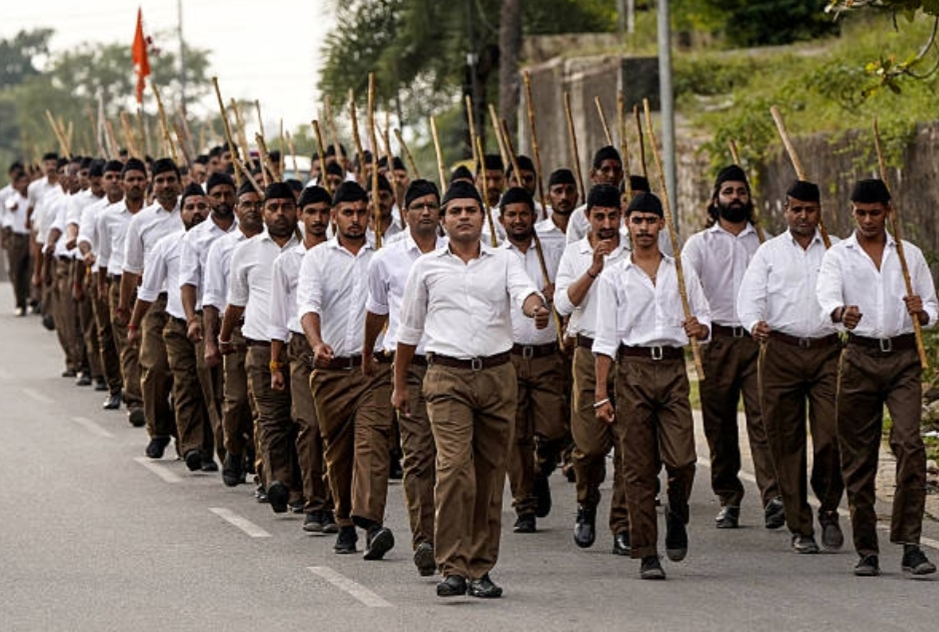
The Rashtriya Swayamsevak Sangh (RSS) was founded by Dr. Keshav Baliram Hedgewar in 1925 on the occasion of Vijayadashami in Nagpur, with Hindutva as its central ideology. The organisation has successfully completed 100 years of its journey and celebrated its centenary year across the entire country. It is now advancing towards its 101st year. During this onward march, the Sangh and its karyakartas have overcome numerous struggles, faced many ups and downs, endured insults and opposition from both foreigners and their own people, and absorbed humiliation with patience. Through all this, they have achieved success. Behind this success lies the intense tapasya of pracharaks and grihasthi karyakartas—modern-day rishis in simple white attire who came from ordinary families of earlier times—along with the unwavering dedication and perseverance of ordinary swayamsevaks towards Sangh work. It is because of this that the vast Hindu organisation known as the Sangh has become not only countrywide but worldwide and has been able to celebrate its centenary.
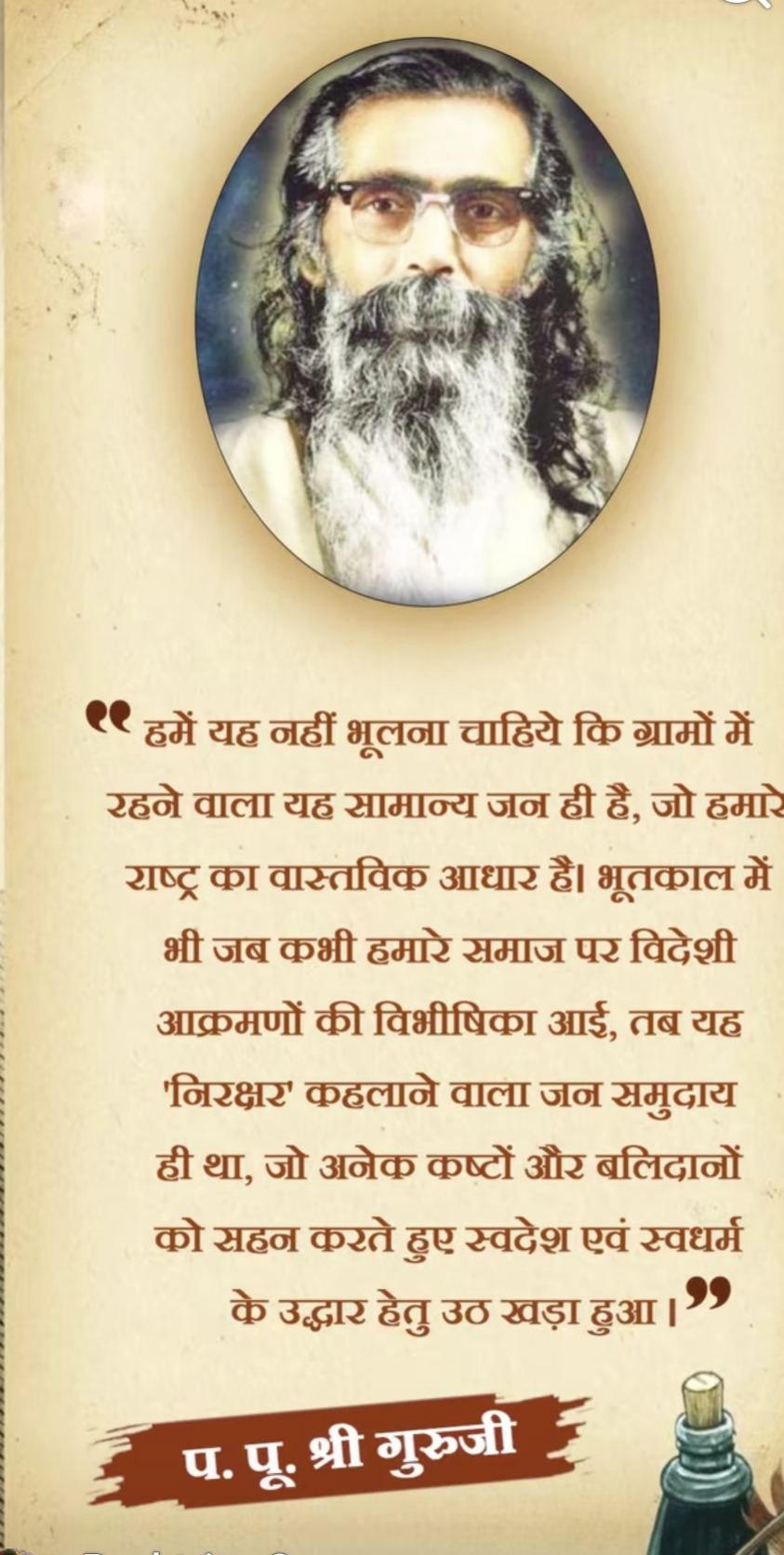
What is the working method of the countrywide Rashtriya Swayamsevak Sangh? How does the Sangh’s work function? These questions arise in many minds, and discussions on them also take place. In simple terms, the Sangh’s method of working is extremely plain and straightforward. The one-hour daily shakha—a centre of devotion to Bharat Mata and continuous creation of karyakartas—is the Sangh’s greatest strength. By gathering every day at the shakha, playing indigenous games, singing collective patriotic songs, and sharing meals, a practical sense of unity is built among Hindus: the conviction that “we are one, we are the sons of Bharat Mata, and we must work for her.” Through these simple programmes, the idea of Hindu unity is given practical expression. The Sangh shakha has also fostered a spirit of selfless social service in society. Because of this simple and easy working method, the Sangh’s work has expanded and it has been able to celebrate its centenary. In keeping with its method, the Sangh never celebrates any programme merely as an “event.” Therefore, during the Sangh centenary year, instead of erecting statues of Dr. Hedgewar and Shri Golwalkar Guruji in village after village, swayamsevaks established Sangh shakhas in those villages. They set up service projects even in remote hamlets, settlements, and small habitations, thereby bringing about a massive expansion of Sangh work. Earlier, during Dr. Hedgewar’s birth centenary, the Seva Karya Abhiyan was organised; during Shri Golwalkar Guruji’s birth centenary, the Rashtra Jagaran Abhiyan was conducted; and now programmes of high quality such as Panch Parivartan have been structured.
*Dr. Hedgewar Birth Centenary*
The birth centenary of the first Sarsanghchalak of the Rashtriya Swayamsevak Sangh, Dr. Keshav Baliram Hedgewar, was celebrated across the country in 1988–1989. During the centenary year, great impetus was given to the Sangh’s service activities. Emphasis was placed on starting service projects in remote areas and service settlements so that education and healthcare could reach the underprivileged sections of society. Nearly 76,000 programmes were organised across the country, and contact was established with about 15 crore people to inform them about Sangh work. On the occasion of Dr. Hedgewar’s birth centenary, a network of service projects and service activities was woven across the nation. To make the service dimension of the Sangh more effective, the responsibility for service work throughout the country was entrusted to the then All-India officer K. Suryanarayana Rao. Thus, service work received a major boost during this period. The Dr. Hedgewar Hospital medical service project run by the Dr. Babasaheb Ambedkar Pratisthan in Chhatrapati Sambhajinagar was also established during this time. Although various social-service initiatives took place in different parts of the country during Dr. Hedgewar’s birth centenary, no statues of him were erected.
*Shri Golwalkar Guruji Birth Centenary*
The birth centenary of the second Sarsanghchalak of the Rashtriya Swayamsevak Sangh, Madhav Sadashiv Golwalkar (Guruji), was celebrated in 2006–2007 as the Rashtra Jagaran Abhiyan. The centenary year began on Vijaya Ekadashi, 24 February 2006, at Reshimbagh in Nagpur in the presence of the then Sarsanghchalak Sudarshanji and Atal Bihari Vajpayee. The concluding programme was held in Delhi on 18 February 2007 in the presence of the then Vice-President Bhairon Singh Shekhawat. During Shri Golwalkar Guruji’s birth centenary, large Hindu conventions were organised at every taluka level across the country to expand Sangh work, with special emphasis on the theme of social harmony (samarasata). Later, a dedicated Samarasata Vibhag was started within the Sangh’s organisational structure. Programmes based on the shakha system were also designed to make Sangh work all-pervasive and all-encompassing. Letters from Sarsanghchalak Sudarshanji were delivered to swayamsevaks by going to their homes. During this period, various programmes were organised by the Sangh across the country, including discussion sessions with enlightened citizens on topics such as cultural nationalism, social harmony, national security and terrorism, protection of Indian culture, swadeshi and economic self-reliance, organic farming and a cow-based economy, and demographic imbalance. Yet, during Shri Guruji’s birth centenary year, instead of erecting statues, priority was given to programmes promoting social harmony.
*Not Statues in Villages, but Sangh Shakhas*
While celebrating its centenary year, the Rashtriya Swayamsevak Sangh did not organise large-scale events, nor did it erect statues of its founder Dr. Keshav Baliram Hedgewar, Shri Golwalkar Guruji, or Balasaheb Deoras in village after village. It did not establish trusts or memorials in their memory. Slogans such as “Dr. Hedgewar Amar Rahe” or “Sarsanghchalakji Aage Badho, Hum Tumhare Saath Hain” were not raised either. From Kashmir to Kanyakumari and from the Setu to Himachal, Sangh karyakartas simply carried out the work expected of them in their own villages—binding Hindu society in the thread of unity, that is, establishing Sangh work. They set up Sangh shakhas, weekly milan programmes, and Sangh mandals in village after village. Through Panch Parivartan, a harmonious and integrated Hindu society devoted to Bharat Mata and rising above caste distinctions was brought together under the saffron flag at the shakha. Through the Joint RSS initiative, lakhs of young swayamsevaks devoted to the worship of Bharat Mata were shaped; they carried the inspiration of selfless work into various spheres of social life. As a result, even as the Sangh centenary year draws to a close, Sangh work has expanded enormously and is receiving social acceptance.
Holding the lofty ideal of “nation-building through individual character-building,” the Sangh and its karyakartas have been engaged in the task of nation-building for the past 100 years. Because of the shakha and the Sangh’s various dimensions and socially useful projects, its work is now visible as all-pervasive and all-encompassing. Initiatives in health, advocacy of swadeshi, rural development, environment, water issues, cow protection and cow conservation, and social harmony have brought positive changes in society, and their beneficial results are becoming evident. The idea of social harmony has led to the concept of “one village, one water source”; young men from Dalit communities are being trained as priests and are performing worship in temples. Service projects providing educational and healthcare facilities for Vanvasi brethren in remote areas have been established, thereby checking religious conversions. Activities of conversion have been curbed, and incidents like Meenakshipuram have not been repeated anywhere in the country. During its centenary year, the Sangh has established the above-mentioned dimensions and movements across the entire country and has advanced the work of social transformation and national awakening.
Ashok Rane
Akola
942365838